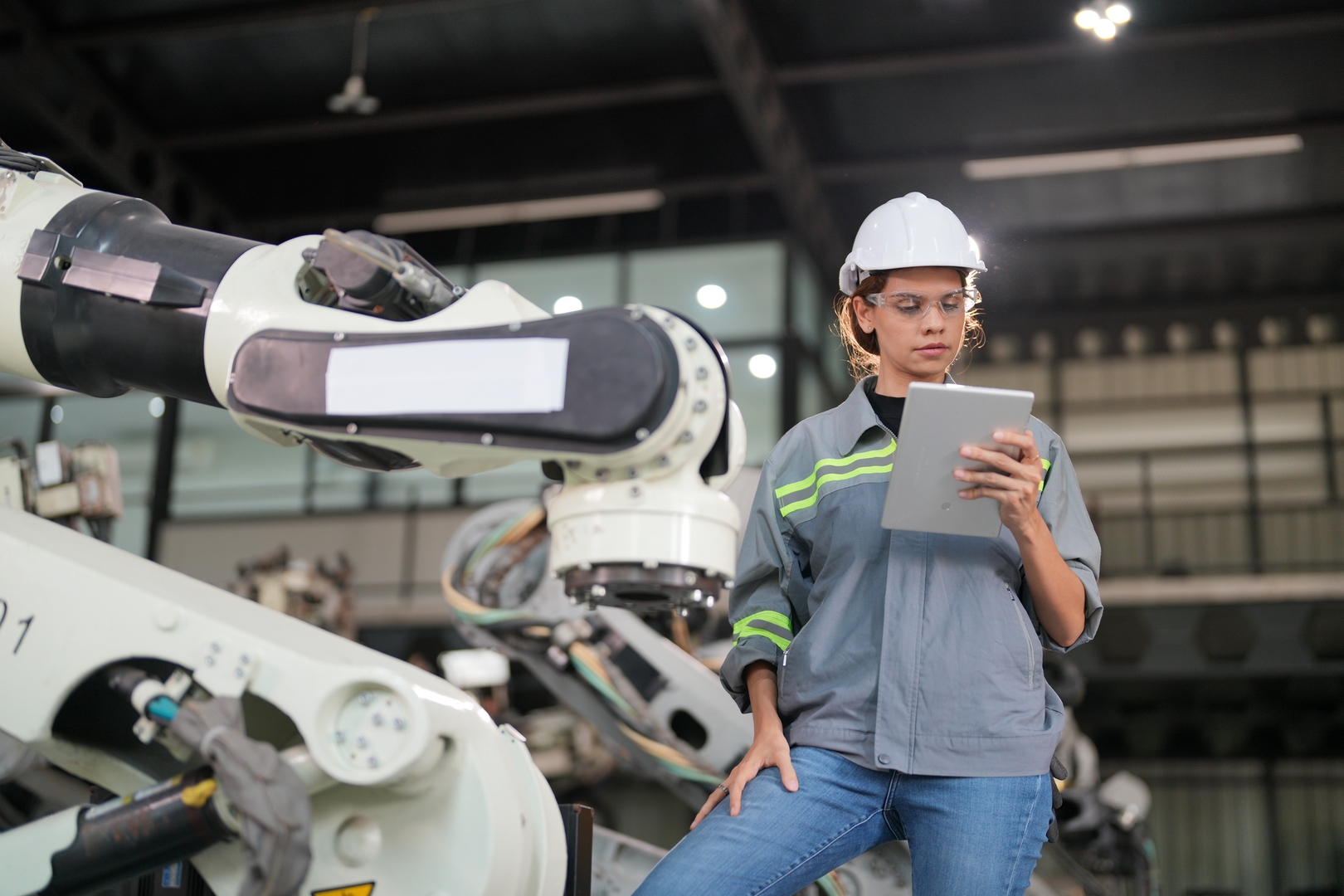
When discussing Artificial Intelligence in industry, algorithms often receive the spotlight. Yet, without data, even the most sophisticated models remain ineffective. Real progress in manufacturing AI depends on datasets that are broad, accurate, and reflective of real-world complexities. This is precisely where synthetic data has become a turning point, transforming scarcity into abundance.
In manufacturing environments, data for critical situations – machine breakdowns, hazardous events, or rare anomalies – is seldom captured. These cases, however, are essential for building reliable machine learning models. By generating synthetic versions of such data, companies can overcome long-standing limitations and push industrial AI into new territory.
The Essence of Synthetic Data
Synthetic data refers to artificially generated images, sensor outputs, and signals created to mirror the statistical behaviour of real processes. These datasets are not mere approximations, but carefully crafted, annotated resources that simulate the full variety of operational scenarios. For industrial AI, this ensures a foundation that is both rich and scalable.
Such data makes it possible to:
- Identify product flaws such as cracks, corrosion, or scratches
- Train robotic arms to handle navigation and manipulation tasks
- Build predictive maintenance models based on simulated sensor patterns
- Detect emergencies like leaks, fires, or structural failures
By making rare or dangerous events reproducible on demand, synthetic data ensures that AI systems can learn without waiting for unpredictable real-world occurrences.
Why Synthetic Data Surpasses Traditional Collection
Gathering industrial data through real operations poses several challenges. It is not only costly and time-consuming, but also impractical when rare or hazardous events are needed. Engineers cannot stage explosions, leaks, or full equipment failures regularly just to feed training pipelines.
Synthetic generation turns this limitation into an advantage. Once digital models or twins exist, they allow endless variations of the same scenario – altered lighting, different machine states, new defect types – produced at scale. Four main strengths highlight why this approach has gained momentum:
- Efficiency – Generating datasets digitally can cut costs by up to 80% and reduce preparation time from months to days.
- Scalability – With digital twins, even newly designed machines or materials can have datasets built instantly.
- Safety – Dangerous conditions can be replicated in virtual space without putting workers or facilities at risk.
- Compliance – Because synthetic data contains no personal or sensitive information, it is inherently GDPR-compliant.

The Technology Behind the Scenes
Creating synthetic datasets blends simulation with advanced AI models.
- Generative models such as GANs, VAEs, and diffusion frameworks add realistic detail and variety to visual and sensor-based data.
- Physics-based simulators reproduce how machinery and materials behave in complex conditions, from wear and tear to high-stress performance.
- Digital twins act as virtual replicas of entire machines or production systems, enabling detailed, repeatable experimentation.
- Cloud infrastructure provides the computational capacity to generate millions of examples quickly and at scale.
Together, these technologies deliver synthetic datasets that are both reliable and versatile enough to train state-of-the-art AI systems.
Proven Industrial Use Cases
Far from being experimental, synthetic data is already deeply embedded in industrial AI strategies:
- Quality Control: Automotive leaders like BMW and Ford improved defect detection accuracy by over 40% by incorporating synthetic images.
- Predictive Maintenance: GE leveraged synthetic sensor data to reduce turbine downtime by 25%.
- Robotics: Collaborative robots are trained virtually before entering the assembly line, ensuring smoother integration.
- Safety Training: Chemical spill scenarios and fire emergencies can be digitally replicated, preparing AI systems for rare but critical events.
Challenges That Remain
Despite its benefits, synthetic data requires deliberate execution:
- Building accurate digital twins demands detailed CAD models and domain expertise.
- The “simulation-to-reality gap” means synthetic results must still be validated against actual data.
- Teams need the right skills and infrastructure, though cloud services and specialised providers ease these hurdles.
Linvelo’s Role in Driving Adoption
Linvelo helps enterprises adopt synthetic data strategies with a team of more than 70 experts in engineering and consulting. The company supports organisations in building digital twins, scaling data pipelines, and applying domain randomisation for more robust AI outcomes. With this expertise, clients can reduce project risks, shorten development cycles, and ensure measurable business impact.
👉 Reach out to Linvelo to explore how synthetic data can power your AI journey.
FAQ
What exactly is synthetic data?
They are artificially generated datasets – images, signals, or sequences – that mimic real-world industrial environments.
Why are they so valuable?
Because collecting rare, risky, or proprietary data in real factories is often impossible or prohibitively expensive.
How long until companies can deploy them?
If CAD models and initial infrastructure are ready, usable pipelines can be operational in a matter of weeks.
Are synthetic datasets shareable?
Yes. They contain no confidential or personal elements, making them secure for use across sites and with partners.