Artificial Intelligence has long left the realm of science fiction. While most people still associate it with chatbots like ChatGPT, its true potential reaches far beyond text generation. Today, AI acts as a force multiplier for businesses, streamlining operations, lowering costs, and opening up entirely new possibilities.
Instead of replacing humans, AI takes over the repetitive, data-heavy work, giving employees space to focus on strategy and creativity. Companies that recognise this shift early gain an undeniable advantage in speed, precision, and adaptability.
This article explores where AI already creates measurable value, what conditions companies must meet before adoption, and how to integrate AI step by step.
Understanding the Nature of AI
At its heart, AI consists of systems trained to learn from data, identify patterns, and make independent decisions. Its main techniques include:
- Machine Learning (ML) – statistical models that improve as they process more data.
- Natural Language Processing (NLP) – algorithms that understand, analyse, and generate human language.
- Deep Learning – neural networks mimicking the brain’s structure for complex problem-solving.
- Computer Vision – systems that interpret images and video content.
These methods empower AI to generate forecasts, analyse consumer sentiment, optimise supply chains, and even create designs.
The appeal lies in its scalability. AI performs tasks faster, more consistently, and on a scale humans cannot achieve. The result: better insights, accelerated decision-making, and increased competitiveness.
Key Areas of AI Impact
AI is not one-size-fits-all. Different departments benefit in unique ways. Let’s have a closer look at the practical business domains already transformed.
1. Marketing & Sales
Few functions have embraced AI as quickly as marketing and sales. Algorithms mine customer data to forecast purchasing behaviour, identify promising leads, and fine-tune campaigns on the fly.
Generative AI makes personalised outreach at scale possible – emails, social media posts, and landing pages tailored for specific audience segments. Machine learning continuously scores leads based on their likelihood to convert, allowing sales teams to prioritise with laser focus.
Customer reviews and surveys are automatically analysed, surfacing hidden trends and guiding adjustments to campaigns. Platforms like Salesforce and HubSpot integrate A/B testing and dynamic optimisation powered by AI.
Benefits at a glance:
- Hyper-personalized campaigns.
- Accurate sales forecasts.
- Automated lead scoring.
- Smarter social media management.
- Campaign refinement through feedback analysis.
2. Manufacturing & Production
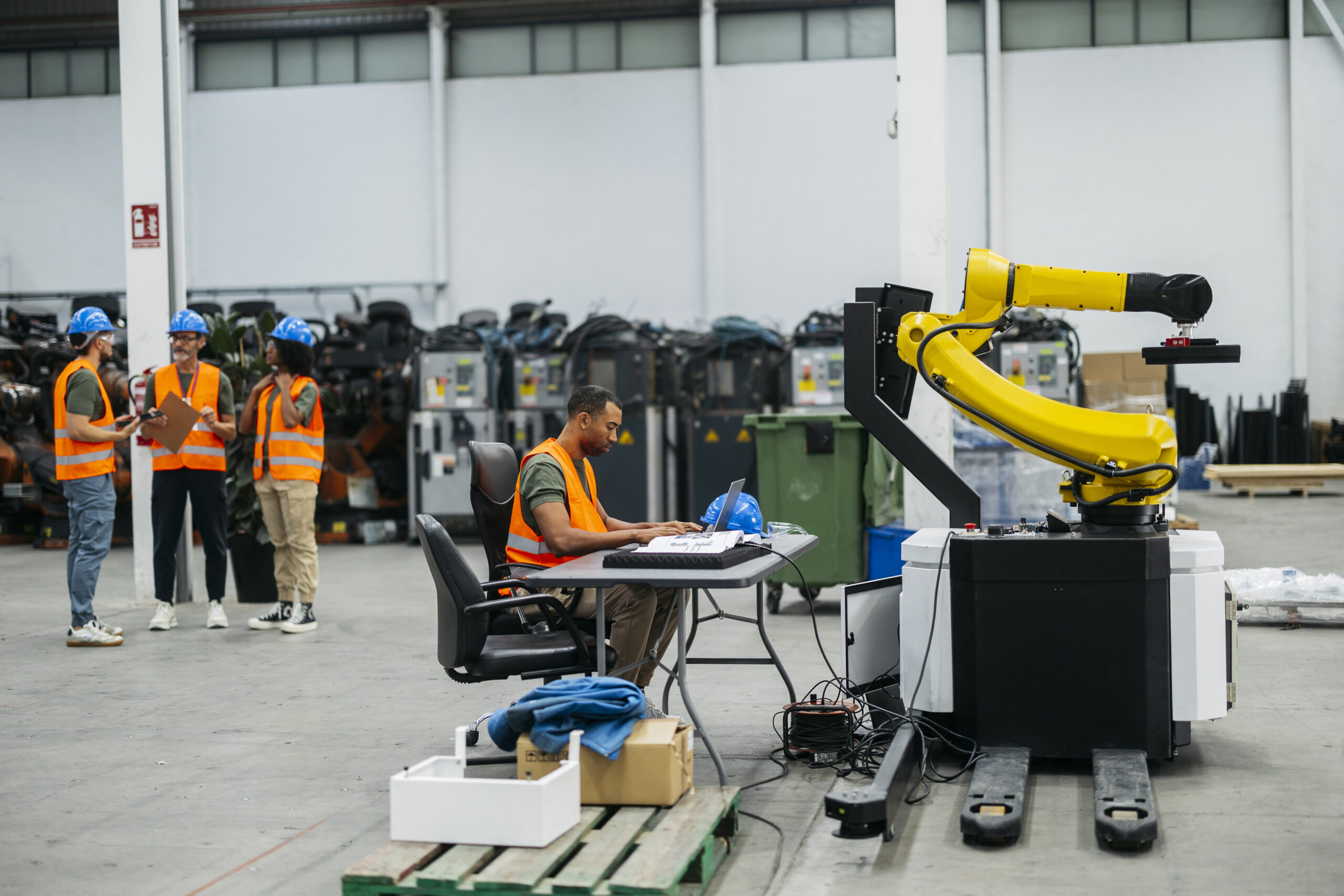
AI is a game-changer on the factory floor. With IoT sensors streaming data, production lines become intelligent ecosystems capable of self-correcting.
Predictive maintenance ensures machines are serviced before failures occur, reducing downtime. Generative design tools test thousands of configurations digitally, accelerating product development cycles and improving cost efficiency.
Applications include:
- Fault detection and root cause analysis.
- Maintenance optimisation.
- Automated process control.
- Faster, cost-effective product design.
3. Logistics & Supply Chain
AI turns supply chains into predictive, flexible networks. By combining historical and real-time data, ML models accurately anticipate demand, optimise inventory, and redirect shipments dynamically.
Generative AI supports planning by modelling future market conditions, while Robotic Process Automation (RPA) simplifies customs, billing, and shipping paperwork.
Sustainability goals also benefit: smarter routing lowers emissions and fuel costs.
Core contributions:
- Demand forecasting and inventory control.
- Smart route planning.
- Streamlined shipping documentation.
- Lower operational costs and carbon footprint.
4. Human Resources
HR departments increasingly leverage AI for both recruitment and employee retention.
Resumes are screened in minutes, predictive analytics spot turnover risks, and onboarding chatbots answer employee questions instantly. Personalised learning platforms adapt training modules to each worker’s needs, ensuring continuous skill development.
Examples include:
- Automated CV screening.
- Employee retention predictions.
- Tailored training journeys.
- Sentiment analysis of workplace communication.
5. Customer Service
AI is revolutionising how businesses interact with their clients.
Chatbots powered by NLP handle routine inquiries instantly, while routing systems ensure complex cases reach the right agent. Fraud detection tools flag suspicious activity before it escalates.
Customers benefit from faster responses, while companies reduce support costs and improve satisfaction.
Advantages:
- 24/7 service availability.
- Personalisation at scale.
- Reduced wait times.
- Fraud prevention.
Preparing for AI Integration
Jumping into AI without preparation risks wasted resources. Companies must start with a clear assessment:
- Which tasks are repetitive and data-heavy?
- Where is the quality of data high enough?
- Do current processes align with AI-driven optimisation?
- How do projects connect to larger business goals?
Building a cross-functional team (IT, operations, management, and external partners) ensures both technical feasibility and strategic alignment. Equally important is compliance – legal and ethical risks must be considered upfront.
Using the SMART framework helps guide project goals:
- Specific – Define exact outcomes.
- Measurable – Track KPIs.
- Achievable – Fit resources and timeline.
- Relevant – Align with corporate strategy.
- Time-bound – Set deadlines.
Why Start with Pilots
Pilot projects act as low-risk testbeds. Whether invoice automation, chatbot deployment, or predictive maintenance, small-scale trials generate quick wins and reveal pitfalls before full rollout.
Successes from pilot programs often create the organisational momentum needed for wider adoption.
Data: The Lifeblood of AI
No AI project can succeed without clean, structured data. Inconsistent or incomplete datasets lead to unreliable predictions and poor results. Ensuring data quality is a foundational step that cannot be skipped.
Linvelo’s Free AI Workshop
To support companies exploring AI adoption, Linvelo offers a free consultation workshop. The goal: identify the fastest return on investment for small and mid-sized businesses, and co-create a tailored roadmap for implementation.
Everyday Examples of AI
- RPA for invoice and contract management.
- Chatbots provide instant customer service.
- Predictive maintenance in factories.
- Automated lead nurturing.
- Dynamic pricing in e-commerce.
Final Thoughts
AI is not about man versus machine – it’s about amplifying human capability. By eliminating repetitive tasks and delivering precise insights, AI empowers teams across marketing, HR, logistics, manufacturing, and customer service.
The companies that will thrive are those that marry technical innovation with strategic vision. Waiting is no longer an option – the future is already here.
Frequently Asked Questions
What is the biggest business advantage of AI?
Automating repetitive processes and enabling more accurate decisions.
How does AI enhance customer service?
Chatbots and automated routing speed up responses and improve satisfaction.
Can AI support HR processes?
Yes – resume screening, retention forecasting, and personalised training are all common applications.
Why does data quality matter so much?
Because poor data equals poor results – reliable AI depends on clean, complete information.
What does Linvelo provide?
Tailored AI solutions, software development, and digital strategy to help businesses succeed.